

Introduction
Fake generator tools have become increasingly popular among developers, software testers, students, marketers, and designers. These tools create realistic-looking but fictional information that can be safely used for testing applications, filling demo forms, creating sample databases, or protecting personal privacy.
Instead of using real personal information, fake generators help users create fictional identities and sample data within seconds. In this guide, we’ll explore the seven most useful fake generator tools, explain how they work, discuss why they’re useful, and share important tips for using them responsibly.
Why Fake Generator Tools Are Used
People use fake generators for many legitimate reasons across different industries.
Some common purposes include:
- Testing websites and mobile applications
- Creating sample databases
- Software development
- UI/UX design
- Demonstrating online forms
- Educational projects
- Privacy protection
- API testing
- Quality assurance (QA)
- Database demonstrations
Using fake information prevents exposure of real personal data during testing and development.
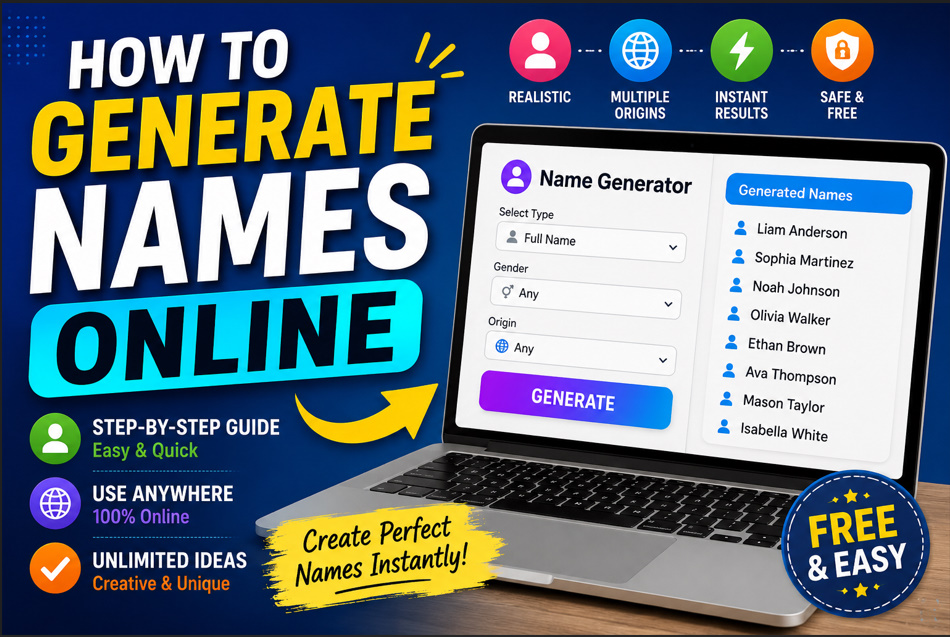
1. Fake Name Generator
A Fake Name Generator creates realistic first names, last names, usernames, and sometimes complete fictional identities based on different countries and languages.
Common Uses
- Testing registration forms
- Creating fictional characters
- Sample user accounts
- Classroom demonstrations
- Database testing
- Website prototypes
Benefits
- Thousands of realistic names
- Multiple nationalities
- Instant generation
- Easy copy and paste
- Supports developers and students
2. Fake SSN Generator
A Fake SSN Generator creates randomly formatted Social Security Number-like values for demonstration and software testing.
Common Uses
- Testing validation systems
- Practice forms
- HR software development
- Employee database testing
- Educational demonstrations
- QA testing
Important Note
These numbers should only be used for testing, educational purposes, and fictional examples. They should never be used for fraud, identity theft, or impersonation.
3. Fake Address Generator
A Fake Address Generator produces fictional street addresses, cities, ZIP/postal codes, and state information.
Common Uses
- E-commerce testing
- Shipping software
- Delivery applications
- CRM systems
- Checkout page testing
- Demo websites
Benefits
- Saves testing time
- Protects real addresses
- Generates realistic formats
- Supports multiple countries
- Easy integration
4. Fake Person Generator
A Fake Person Generator creates complete fictional identities, often including:
- Full name
- Address
- Birthday
- Occupation
- Phone number
- Email address
- Username
- Gender
- Nationality
Common Uses
- Application testing
- UI mockups
- CRM demonstrations
- Software development
- Educational projects
- Database population
These profiles help simulate real users without exposing actual personal information.
5. Fake Word Generator
A Fake Word Generator creates random words that resemble real language but have no official meaning.
Common Uses
- Branding ideas
- Game development
- Fantasy writing
- Password examples
- Placeholder text
- Language research
Designers and writers often use these tools when brainstorming unique names.
6. Fake Email Generator
A Fake Email Generator creates fictional email addresses that can be used in demos, documentation, and software testing.
Common Uses
- Registration form testing
- Email validation testing
- Sample databases
- UI demonstrations
- API development
- Training exercises
Using fake email addresses prevents accidental exposure of real email accounts during testing.
7. Fake Phone Number Generator
A Fake Phone Number Generator creates fictional telephone numbers formatted according to different countries and regions.
Common Uses
- Contact form testing
- CRM software
- Mobile application development
- User profile creation
- Demo databases
- Documentation examples
These numbers help developers test phone number validation without using real contact information.
How Fake Generator Tools Work
Most fake generators rely on large datasets, randomization algorithms, and formatting rules to produce realistic-looking information.
The process typically involves:
- Selecting a country or region
- Randomly generating data
- Applying proper formatting
- Displaying realistic results
- Allowing one-click copying
- Generating new records instantly
Because the data is fictional, it is generally suitable for testing and educational purposes.
Things to Keep in Mind While Using Fake Generator Tools
Responsible use is essential. Keep the following points in mind:
Use Only for Legal Purposes
Generate fake information only for testing, education, demonstrations, or development.
Never Commit Fraud
Do not use fake identities to deceive people, bypass verification systems, or engage in illegal activities.
Avoid Impersonation
Never create fake profiles intended to imitate real individuals.
Verify Random Data
Some generated information may not match your testing requirements. Always review the output before using it.
Read the Tool’s Policies
Different generators have different usage terms and privacy policies.
Protect Sensitive Projects
If working on confidential software, ensure generated data does not accidentally include real personal information.
Respect Platform Rules
Some online services prohibit submitting fake information, even for testing, unless using designated test environments.
Benefits of Using Fake Generator Tools
Using fake generators offers many advantages for individuals and organizations.
Some key benefits include:
- Protects personal privacy
- Saves time
- Generates unlimited sample data
- Improves software testing
- Helps developers build realistic demos
- Supports educational activities
- Simplifies database creation
- Reduces manual data entry
- Works instantly online
- Often available for free
These benefits make fake generators valuable tools for developers, students, researchers, and businesses.
Frequently Asked Questions
Are fake generator tools legal?
Yes. Using fake generators for software testing, education, demonstrations, and development is generally legal. However, using fake information for fraud or illegal activities is not.
Can I use fake names on my website?
Yes, if they are used as sample or demonstration data and do not impersonate real individuals.
Why do developers use fake addresses?
Developers use fake addresses to test forms, shipping systems, databases, and checkout pages without exposing real customer information.
Is a fake SSN generator safe?
It is safe when used for testing and educational purposes. Generated numbers should never be used as real Social Security Numbers or for identity-related activities.
Which fake generator is the most useful?
The best choice depends on your needs. Fake Name Generators are ideal for user profiles, Fake Address Generators for shipping tests, Fake Person Generators for complete identities, Fake Word Generators for creative projects, and Fake SSN Generators for software validation. Many developers also rely on Fake Email and Fake Phone Number Generators to build realistic test datasets.
Conclusion
Fake generator tools are essential resources for software developers, testers, designers, educators, and students. They provide realistic but fictional information that supports application testing, database creation, UI demonstrations, and educational projects while helping protect real personal data.
Whether you need a fake name, address, Social Security Number format, complete person profile, random word, email address, or phone number, these tools save time and improve workflow. Always use them responsibly, ethically, and only for legitimate purposes to ensure compliance with laws and platform policies.